Solar Water Heater for Home
Harnessing the Sun: Your Complete Guide to a Solar Water Heater for Home in 2025
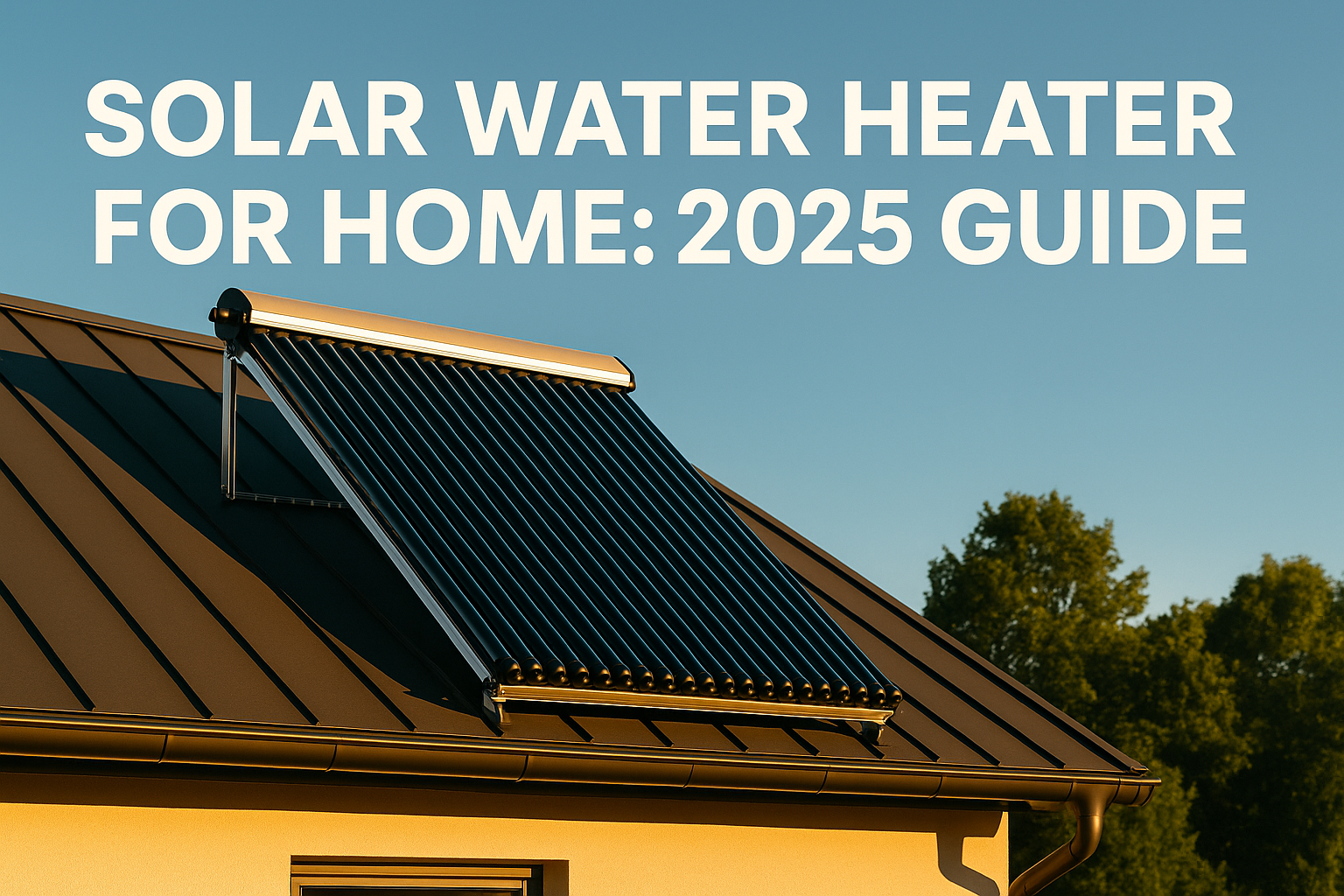
Imagine a future where your hot showers, clean dishes, and warm laundry don't come with the constant dread of rising utility bills. A future where your home's hot water supply is powered directly by the sun, clean, efficient, and endlessly renewable. This isn't a distant dream; it's the reality offered by a solar water heater for home, and in 2025, these systems are more advanced, affordable, and accessible than ever before. For homeowners looking to significantly cut energy costs, reduce their carbon footprint, and embrace sustainable living, investing in a solar water heater for home is a smart, forward-thinking decision. This comprehensive guide will equip you with everything you need to know to make an informed choice, from understanding how these systems work to selecting the right one for your specific needs.
Key Takeaways
- Significant Savings & Environmental Impact: A solar water heater for home can reduce hot water heating costs by 50-80% annually, leading to substantial long-term savings and a considerable reduction in your carbon footprint.
- Two Main System Types: Direct (open-loop) systems are simpler and cost less but are not suitable for freezing climates. Indirect (closed-loop) systems use a heat-transfer fluid and are ideal for areas with freezing temperatures.
- Collector Technology Matters: Flat-plate collectors are cost-effective and suitable for most climates, while evacuated tube collectors offer higher efficiency, especially in colder or overcast conditions.
- Sizing and Professional Installation are Crucial: Proper sizing of the collector and storage tank, along with professional installation by certified technicians, ensures optimal performance, safety, and longevity of your system.
- Government Incentives & ROI: Federal tax credits, state rebates, and local incentives can significantly offset the initial cost, improving your return on investment and making solar water heating a highly attractive option in 2025.
Understanding the Fundamentals: How a Solar Water Heater for Home Works
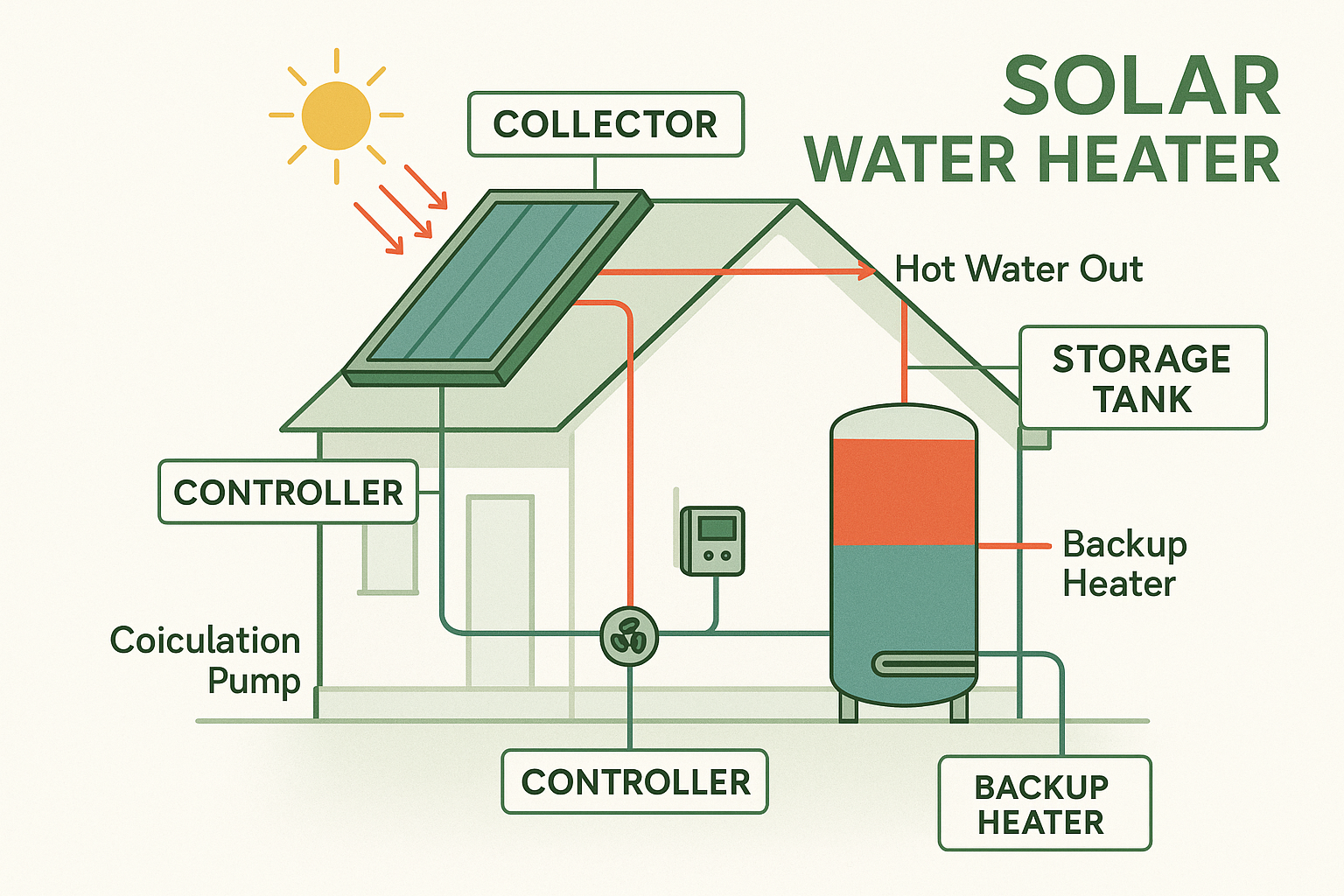
A solar water heater for home, also known as a solar domestic hot water (SDHW) system, harnesses the sun's energy to heat water for your household needs. It typically consists of a solar collector, an insulated storage tank, and a control system. While the specific components and configurations can vary, the core principle remains the same: solar energy is captured and transferred to heat water.
The Journey of Solar Hot Water
- Solar Collector: This is the most visible part of the system, usually mounted on a roof or in a sunny yard. It absorbs sunlight and converts it into heat.
- Heat Transfer: Inside the collector, a fluid (either water or a specialized heat-transfer fluid) circulates and gets heated by the absorbed solar energy.
- Storage Tank: The heated fluid travels to an insulated storage tank. Here, a heat exchanger transfers the thermal energy from the fluid to the potable water stored in the tank.
- Distribution: Once the water in the tank reaches the desired temperature, it's ready to be supplied to your faucets, showers, and appliances, just like a conventional water heater.
- Backup System: Most solar water heater for home systems include a conventional backup heater (electric or gas). This ensures you always have hot water, even on cloudy days or during periods of exceptionally high demand.
Key Benefits of a Solar Water Heater for Home
The decision to install a solar water heater for home comes with a multitude of advantages that resonate with both financial prudence and environmental responsibility.
- Significant Energy Bill Reduction: This is often the primary motivator. Hot water heating can account for 15-25% of a typical home's energy consumption. A solar water heater can reduce these costs by 50-80%, leading to substantial savings over the system's lifespan.
- Environmental Stewardship: By relying on solar energy, you drastically reduce your reliance on fossil fuels, lowering your carbon footprint and contributing to a cleaner environment. Each solar water heater for home helps combat climate change.
- Increased Home Value: Homes with renewable energy systems like solar water heaters often command higher resale values, appealing to environmentally conscious buyers.
- Long-Term Reliability: Solar water heating systems are known for their durability and long lifespan, often lasting 20 years or more with proper maintenance.
- Reduced Grid Dependency: Generate your own hot water, gaining a degree of energy independence from fluctuating utility prices and potential grid outages.
- Government Incentives: In 2025, various federal, state, and local incentives, such as tax credits and rebates, make the initial investment more manageable and accelerate your return on investment.
Types of Solar Water Heater for Home Systems
When considering a solar water heater for home, you'll primarily encounter two main types: active and passive. Within active systems, there are further distinctions based on how the heat transfer fluid circulates. The best choice depends largely on your climate, budget, and hot water needs.
Active Solar Water Heating Systems
Active systems use pumps and controllers to circulate water or a heat-transfer fluid through the collectors and into the storage tank. They are generally more efficient and reliable than passive systems, especially in areas with freezing temperatures.
1. Direct Circulation Systems (Open-Loop)
- How they work: Potable water is pumped directly through the collectors, where it's heated by the sun, and then flows into the storage tank.
- Pros: Simpler design, generally less expensive to install, and can be very efficient in sunny, non-freezing climates.
- Cons: Not suitable for climates where freezing occurs, as freezing water in the collectors can cause significant damage. Also, mineral buildup can be an issue in areas with hard water.
- Best for: Homes in consistently warm, sunny climates like Florida, Arizona, or parts of California.
2. Indirect Circulation Systems (Closed-Loop)
- How they work: A non-freezing, heat-transfer fluid (usually a propylene glycol and water mixture) circulates through the collectors, gets heated, and then flows through a heat exchanger in the storage tank, transferring its heat to the potable water.
- Pros: Ideal for climates with freezing temperatures, as the anti-freeze solution prevents collector damage. Protects collectors from mineral buildup.
- Cons: More complex design, generally more expensive to install, and slightly less efficient than direct systems due to the heat exchanger.
- Best for: Most regions with a distinct winter season, including northern states and Canadian provinces.
Passive Solar Water Heating Systems
Passive systems operate without pumps or controllers, relying on natural convection to circulate water. They are typically less expensive and simpler to install but also less efficient than active systems.
1. Integral Collector-Storage (ICS) or Batch Systems
- How they work: These systems combine the collector and storage tank into a single unit, usually a black tank or tubes integrated into an insulated box. Water is heated directly within this unit by the sun.
- Pros: Simplest and least expensive, no moving parts, low maintenance.
- Cons: Can lose heat quickly on cold nights, not suitable for freezing climates, limited hot water capacity, and visually less appealing on a rooftop.
- Best for: Homes with low hot water demand in very sunny, consistently warm climates, or as a pre-heater for a conventional system.
2. Thermosyphon Systems
- How they work: These systems rely on the natural principle that hot water rises and cold water sinks. The storage tank is positioned above the collector. As water in the collector heats up, it naturally rises into the tank, while cooler water from the tank flows down to the collector to be heated.
- Pros: No pumps or controllers needed, lower maintenance, reliable.
- Cons: Tank must be placed above the collector, which can be visually intrusive or require structural reinforcement. Not suitable for freezing climates.
- Best for: Homes in sunny, non-freezing climates with adequate space for tank placement above the collectors.
Collector Technologies: Flat Plate vs. Evacuated Tube for your Solar Water Heater for Home
The solar collector is the heart of any solar water heating system. The two primary types of collectors used in a solar water heater for home are flat-plate and evacuated tube. Each has distinct characteristics that make them suitable for different applications and climates.
1. Flat-Plate Collectors
Flat-plate collectors are the most common and often the most recognizable type. They resemble skylights and are typically installed flush with the roof.
- Construction: Consist of a dark, heat-absorbing plate (usually copper or aluminum) in an insulated box with a transparent glass or plastic cover. Water or heat-transfer fluid flows through tubes attached to the absorber plate.
- Efficiency: Good efficiency in sunny, moderate to warm climates. They perform well when ambient temperatures are not extremely low.
- Cost: Generally less expensive per square foot than evacuated tube collectors.
- Durability: Robust and typically designed to withstand harsh weather conditions, including hail.
- Aesthetics: Can be integrated cleanly into a roofline.
- Best for: Most residential applications in areas without extreme cold, where direct sunlight is abundant.
2. Evacuated Tube Collectors
Evacuated tube collectors are more advanced and offer higher efficiency, especially in less ideal conditions.
- Construction: Composed of multiple rows of transparent glass tubes, each containing an inner metal absorber fin with a heat pipe. The space between the inner and outer glass tubes is a vacuum, which acts as excellent insulation.
- Efficiency: Significantly higher efficiency, particularly in colder temperatures, cloudy conditions, or when operating at higher water temperatures. The vacuum insulation minimizes heat loss.
- Cost: More expensive than flat-plate collectors due to their complex design and manufacturing process.
- Durability: Individual tubes can be replaced if damaged. The vacuum seal can degrade over time, but modern tubes are very reliable.
- Performance in Cold Weather: Excel in cold climates because the vacuum insulation prevents heat loss to the environment.
- Best for: Homes in colder climates, areas with frequent overcast skies, or applications requiring very high water temperatures.
Comparison Snapshot: Flat-Plate vs. Evacuated Tube
| Feature | Flat-Plate Collectors | Evacuated Tube Collectors |
|---|---|---|
| Efficiency | Good in sunny, moderate climates | Excellent, especially in cold/cloudy conditions |
| Cost | Lower initial cost | Higher initial cost |
| Cold Weather | Less effective; risk of freezing in direct systems | Highly effective due to vacuum insulation |
| Maintenance | Low; occasional cleaning | Low; individual tube replacement possible |
| Aesthetics | Sleeker, often flush with roof | More prominent, multiple tubes |
| Damage Risk | Less prone to damage from hail, but whole unit | Individual tubes can be damaged, but easily replaceable |
| Temperature Output | Moderate hot water temperatures | Higher hot water temperatures possible |
| Ideal Climate | Warm to temperate zones | Cold climates, high altitude, or less direct sunlight areas |
Sizing and Installation Considerations for Your Solar Water Heater for Home
Proper sizing and professional installation are paramount to the efficiency, longevity, and safety of your solar water heater for home. A poorly sized or installed system will underperform, leading to frustration and higher energy bills.
Sizing Your Solar Water Heater for Home
The size of your solar water heating system depends on several factors:
- Household Hot Water Demand: This is typically measured by the number of people in the household and their hot water usage habits.
- 1-2 people: 40-50 gallon tank
- 3-4 people: 60-80 gallon tank
- 5+ people: 80-120 gallon tank Your backup water heater size can influence this, as a solar pre-heater might allow for a smaller conventional tank.
- Climate: The amount of available sunlight in your region (solar insolation) will determine how many collectors you need. Sunnier climates require fewer collectors for the same hot water output.
- Collector Type: Evacuated tube collectors are more efficient per square foot, potentially requiring fewer collectors than flat-plate systems to achieve the same heating capacity.
- Desired Solar Contribution: Do you want the solar system to cover 50%, 70%, or 90% of your hot water needs? A higher percentage requires a larger system.
Site Assessment and Location
A professional installer will conduct a thorough site assessment, which is critical for optimal performance.
- Sun Exposure: The collectors must be placed in an unshaded location for the majority of the day, especially between 9 AM and 3 PM. Trees, chimneys, and adjacent buildings can all cast shadows.
- Orientation: In the Northern Hemisphere, collectors should ideally face true south (or slightly southeast/southwest) to maximize solar gain. In the Southern Hemisphere, they should face true north.
- Tilt Angle: The optimal tilt angle for collectors often matches your geographical latitude for year-round performance. Adjustments can be made if seasonal performance (e.g., more hot water in winter) is prioritized.
- Roof Integrity: The roof must be structurally sound to support the weight of the collectors and storage tank (if roof-mounted). It should also be in good condition to avoid needing repairs shortly after installation.
- Pipe Runs: Shorter pipe runs between collectors and the storage tank minimize heat loss.
Professional Installation is Key
While some DIY enthusiasts might consider installing a solar water heater for home, it is strongly recommended to use a certified professional.
- Expertise: Professionals have the knowledge to correctly size the system, choose the right components, and ensure proper integration with your existing plumbing and electrical systems.
- Safety: Working on roofs and with plumbing and electrical systems carries inherent risks. Certified installers are trained in safety protocols.
- Warranty: Most manufacturers' warranties require professional installation. Improper installation can void your warranty.
- Permitting & Codes: Installing a solar water heater for home often requires specific permits and must comply with local building and plumbing codes. Professionals are familiar with these requirements.
- Optimal Performance: Correct installation ensures the system operates at peak efficiency, maximizing your savings and minimizing issues.
The Economics of a Solar Water Heater for Home: Costs, Savings, and Incentives
Investing in a solar water heater for home is a long-term decision with significant financial implications. Understanding the upfront costs, potential savings, and available incentives is crucial for making an informed choice in 2025.
Upfront Costs
The initial cost of a solar water heater for home can vary widely based on system type, size, collector technology, and installation complexity.
- System Type: Passive systems (ICS, thermosyphon) are generally less expensive than active systems (direct, indirect).
- Collector Type: Flat-plate collectors are typically more affordable than evacuated tube collectors.
- Size: Larger systems with more collectors and greater storage capacity will naturally cost more.
- Installation: Installation labor and materials, including plumbing modifications, roof work, and electrical connections, contribute significantly to the total cost.
- Backup Heater: If you need a new backup water heater integrated, this will add to the cost.
On average, a fully installed solar water heater for home in 2025 can range from $4,000 to $10,000, before incentives. While this might seem substantial, the long-term savings and available incentives dramatically improve the return on investment.
Long-Term Savings
The primary financial benefit of a solar water heater for home is the significant reduction in your monthly utility bills.
- Reduced Hot Water Costs: As mentioned, solar water heaters can cut your hot water heating costs by 50-80%. For an average family, this can translate to savings of hundreds of dollars per year.
- Stable Energy Costs: Once installed, your solar fuel source (the sun) is free. This shields you from future increases in electricity or natural gas prices.
- System Lifespan: With a lifespan of 20 years or more, the accumulated savings over two decades can easily outweigh the initial investment, often by a significant margin.
Government Incentives and Rebates (2025)
The availability of incentives is a major factor making solar water heating more attractive.
- Federal Solar Tax Credit (Residential Clean Energy Credit): In 2025, homeowners can still claim a 30% federal tax credit
for the cost of a new, qualified solar water heating system. This
credit is available for systems placed in service through 2032,
gradually phasing down afterward. This is a dollar-for-dollar reduction
of your federal income tax liability.
- Example: For a $7,000 system, a 30% tax credit means you could save $2,100 on your federal taxes.
- State and Local Incentives: Many states, municipalities, and even utility companies offer additional incentives such as:
- Rebates: Direct cash back for installation.
- Property Tax Exemptions: Excluding the value added by a solar system from property tax assessments.
- Sales Tax Exemptions: Waiving sales tax on solar equipment.
- Low-Interest Loans: Specialized financing options for renewable energy projects.
It is essential to research the specific incentives available in your region, as they can vary greatly. A reputable solar installer will often be knowledgeable about local programs and can help you navigate the application process.
Return on Investment (ROI)
Considering the average system cost, the substantial energy savings, and the significant federal tax credit, the typical payback period for a solar water heater for home can be anywhere from 4 to 8 years. After this period, your system continues to generate "free" hot water, translating into pure savings for the remainder of its long lifespan. This makes a solar water heater for home one of the most financially sound home improvements you can make.
Installation Process for a Solar Water Heater for Home
Installing a solar water heater for home is a structured process that ensures efficiency, compliance, and safety. Understanding these steps can help you prepare for your project.
[[IMAGE HERE]]
Step 1: Initial Consultation and Site Assessment
- Purpose: The solar company will discuss your hot water needs, assess your property's suitability for solar (sun exposure, roof condition, space for the tank), and determine the best system type and size.
- Output: A detailed proposal outlining the system design, estimated costs, projected savings, and available incentives.
Step 2: System Design and Proposal Review
- Purpose: Based on the assessment, engineers design the optimal system, including collector type and number, tank size, and plumbing schematics.
- Output: A final system design and a contract for your review and approval.
Step 3: Permitting and Approvals
- Purpose: Solar installations often require building, plumbing, and/or electrical permits from local authorities to ensure compliance with safety and building codes.
- Output: Approved permits, which can take several weeks depending on your municipality. Your installer usually handles this.
Step 4: Equipment Procurement
- Purpose: Once permits are secured, the necessary equipment – collectors, storage tank, piping, pumps, controller, and mounting hardware – is ordered and delivered.
Step 5: Installation Day(s)
- Roof Work: Mounting hardware is securely attached to your roof. Collectors are then carefully lifted and mounted.
- Plumbing: Hot and cold water lines are run from the collectors to the storage tank. In indirect systems, lines for the heat-transfer fluid are installed.
- Storage Tank: The solar storage tank (often larger than a conventional tank) is placed, usually in a utility room, garage, or basement. It is connected to the collector lines and your home's existing hot water plumbing.
- Electrical/Controls: Pumps, sensors, and controllers are wired and connected to ensure the system operates automatically.
- Backup Heater Integration: The solar system is integrated with your existing or new backup water heater.
- System Filling and Testing: The system is filled with water or heat-transfer fluid, pressurized, and checked for leaks. The controls are calibrated.
Step 6: Final Inspection and Commissioning
- Purpose: Local building inspectors review the installation to ensure it meets all code requirements. The installer also commissions the system, explaining its operation and maintenance to you.
- Output: A fully operational solar water heater for home and final approval from authorities.
The entire process, from initial consultation to final commissioning, typically takes 4 to 8 weeks, depending on permitting times and the complexity of the installation.
Maintenance and Longevity of Your Solar Water Heater for Home
A properly installed and maintained solar water heater for home is designed for exceptional longevity, often outperforming conventional water heaters. Understanding its maintenance needs will ensure decades of reliable, energy-efficient hot water.
Expected Lifespan
- Collectors: Flat-plate and evacuated tube collectors are built to be very durable, often lasting 20 to 30 years, or even longer, with minimal degradation.
- Storage Tanks: High-quality solar storage tanks can last 10 to 20 years, similar to conventional water heaters.
- Pumps and Controls: These mechanical and electrical components typically have shorter lifespans, around 5 to 10 years, and may require replacement during the system's lifetime.
- Overall System: With proper maintenance, a solar water heater for home can provide hot water for 20 years or more.
Routine Maintenance Tasks
Compared to many other home appliances, solar water heaters require relatively low maintenance. Most tasks can be handled by a homeowner, though annual professional checks are recommended.
- Monthly/Quarterly Checks (Homeowner):
- Visual Inspection: Check collectors for dirt, dust, leaves, or shading objects. Ensure plumbing connections are tight and show no signs of leakage.
- Monitor Performance: Pay attention to your hot water supply. If you notice a significant drop in hot water availability or higher backup heater usage, it might indicate an issue.
- Annual Checks (Professional Recommended):
- Collector Cleaning: If visible dirt or dust accumulates, carefully clean the collector surfaces. Professional cleaning may be needed if you can't safely access your roof.
- Fluid Level/Quality (Indirect Systems): Check the level and quality of the heat-transfer fluid (glycol mixture). It may need to be topped off or replaced every 3-5 years, depending on the fluid type and system.
- Pump and Valve Inspection: Ensure pumps are operating correctly and valves are functioning.
- Pressure Relief Valve: Check the pressure relief valve on the storage tank for proper operation.
- Insulation Integrity: Inspect pipe insulation for damage, as this can lead to heat loss.
- Anode Rod (Storage Tank): Similar to conventional water heaters, the anode rod in the storage tank may need inspection and replacement every few years to prevent corrosion.
- Sediment Flush: Flush sediment from the bottom of the storage tank annually to maintain efficiency.
Preventing Common Issues
- Freezing: For indirect systems, ensure the anti-freeze solution is at the correct concentration. For direct systems in freezing climates, ensure proper drain-down or recirculation freeze protection is functioning.
- Overheating: In periods of low hot water demand and high solar gain (e.g., during a long vacation in summer), systems can sometimes overheat. Some systems have automated heat dissipation mechanisms. Your installer can advise on best practices for your specific system.
- Leaks: Regularly inspect all plumbing connections. Even small leaks can waste water and cause damage over time.
By following these maintenance guidelines, your solar water heater for home will continue to provide efficient, environmentally friendly hot water for decades to come, maximizing your investment.
Choosing the Right Solar Water Heater for Home: Key Factors to Consider
Selecting the ideal solar water heater for home involves balancing several important factors. Making the right choice ensures optimal performance, maximum savings, and long-term satisfaction.
1. Climate and Local Conditions
- Freezing Temperatures: If your region experiences freezing temperatures, an indirect (closed-loop) system with evacuated tube collectors is generally the safest and most efficient choice. Direct systems are only suitable for consistently warm, frost-free climates.
- Cloud Cover: If your area has frequent overcast days, evacuated tube collectors will outperform flat-plate collectors due to their superior insulation and ability to capture diffuse light.
- Sunlight Availability: Areas with abundant, consistent direct sunlight may find flat-plate collectors perfectly adequate and more cost-effective.
2. Household Hot Water Demand
- Number of Occupants: A larger family with higher hot water usage will require a larger system (more collectors, bigger storage tank).
- Usage Habits: Consider peak usage times (e.g., multiple showers in the morning) to ensure adequate hot water capacity.
- Future Needs: Are you planning to expand your family or add a new hot water-consuming appliance (e.g., a hot tub)? Factor this into your sizing.
3. Budget and Return on Investment (ROI)
- Initial Cost: While indirect evacuated tube systems offer higher efficiency, they also have a higher upfront cost. Balance this with your budget.
- Operating Costs: Solar water heaters have very low operating costs compared to conventional systems.
- Incentives: Factor in federal, state, and local incentives (like the 30% federal tax credit in 2025) which significantly reduce the net cost and improve your ROI.
- Payback Period: Consider how quickly the system will pay for itself through energy savings.
4. Space and Aesthetics
- Roof Space: Do you have sufficient, unshaded roof space with the correct orientation (south-facing in the Northern Hemisphere)?
- Tank Location: Where will the storage tank be placed (utility room, basement, garage)? Larger solar tanks may require more space than your current conventional tank.
- Visual Impact: Some homeowners prefer the sleeker look of flat-plate collectors, while others are fine with the more prominent appearance of evacuated tubes or roof-mounted passive tanks.
5. Installer Reputation and Warranty
- Certified Professionals: Always choose an installer with experience in solar thermal systems. Look for certifications (e.g., from NABCEP in the US).
- References and Reviews: Check customer testimonials and reviews.
- Warranty: Understand the warranties offered on the collectors, tank, and installation labor. A strong warranty provides peace of mind.
Decision Checklist for Your Solar Water Heater for Home:
- Climate: Freezing risk? High cloud cover?
- Hot Water Needs: Daily demand? Peak usage?
- Budget: Initial cost vs. long-term savings?
- Incentives: What tax credits/rebates are available?
- Space: Roof and indoor space for tank?
- Aesthetics: Visual preference?
- Installer: Reputable, certified, good warranties?
By carefully evaluating these factors with the help of a qualified solar professional, you can confidently choose the best solar water heater for home that meets your specific requirements and delivers years of reliable, cost-effective hot water.
The Future is Bright: Embracing Solar Hot Water in 2025
As we move further into 2025, the imperative to adopt sustainable energy solutions grows stronger than ever. A solar water heater for home stands out as one of the most practical, impactful, and financially rewarding investments a homeowner can make towards a greener future. It's a technology that has matured significantly, offering robust performance, extended lifespans, and compelling economic benefits.
From the consistent warmth of your daily shower to the peace of mind that comes with reduced utility bills and a smaller carbon footprint, the advantages of solar hot water are multifaceted. The ongoing availability of strong government incentives, such as the 30% federal tax credit, makes 2025 an opportune year to transition your home's hot water supply to the sun.
Moreover, integrating a solar water heater into your home is a step towards greater energy independence and resilience. It adds value to your property and aligns your lifestyle with environmental responsibility. This isn't just about cutting costs; it's about making a conscious choice for health, the planet, and a more sustainable future.
Conclusion: Take the Next Step Towards Solar Hot Water
The information presented here aims to demystify the solar water heater for home and empower you with the knowledge to make an informed decision. With various system types, collector technologies, and robust financial incentives, there's a solar hot water solution available for almost every home and budget.
Actionable Next Steps:
- Assess Your Needs: Estimate your household's daily hot water usage and consider your local climate conditions.
- Research Local Incentives: Investigate state, local, and utility-specific rebates and programs in addition to the federal tax credit. These can significantly impact your total cost.
- Consult with Professionals: Contact at least 2-3 reputable solar thermal installers in your area. Request detailed quotes, system designs, and projected savings specific to your home. Ensure they are certified and experienced.
- Ask Questions: Don't hesitate to ask installers about system sizing, collector types, warranties, maintenance requirements, and their installation process.
- Review the Proposal Carefully: Compare quotes, understand all components and costs, and clarify any uncertainties before committing.
Embrace the power of the sun to heat your home's water. By taking these steps, you can confidently invest in a solar water heater for home in 2025, securing long-term savings, contributing to a healthier planet, and enjoying the comfort of sustainable hot water for decades to come.
Solar Water Heater for Home: 2025 Buyer's Guide & Savings : Explore solar water heaters for home in 2025! Learn types, costs, savings, and federal incentives to cut bills & boost sustainability.


Comments
Post a Comment